

Prune BOKOBZA • October 26, 2026

FACET announces four new Franco-Australian projects as industry co-investment tops 54%
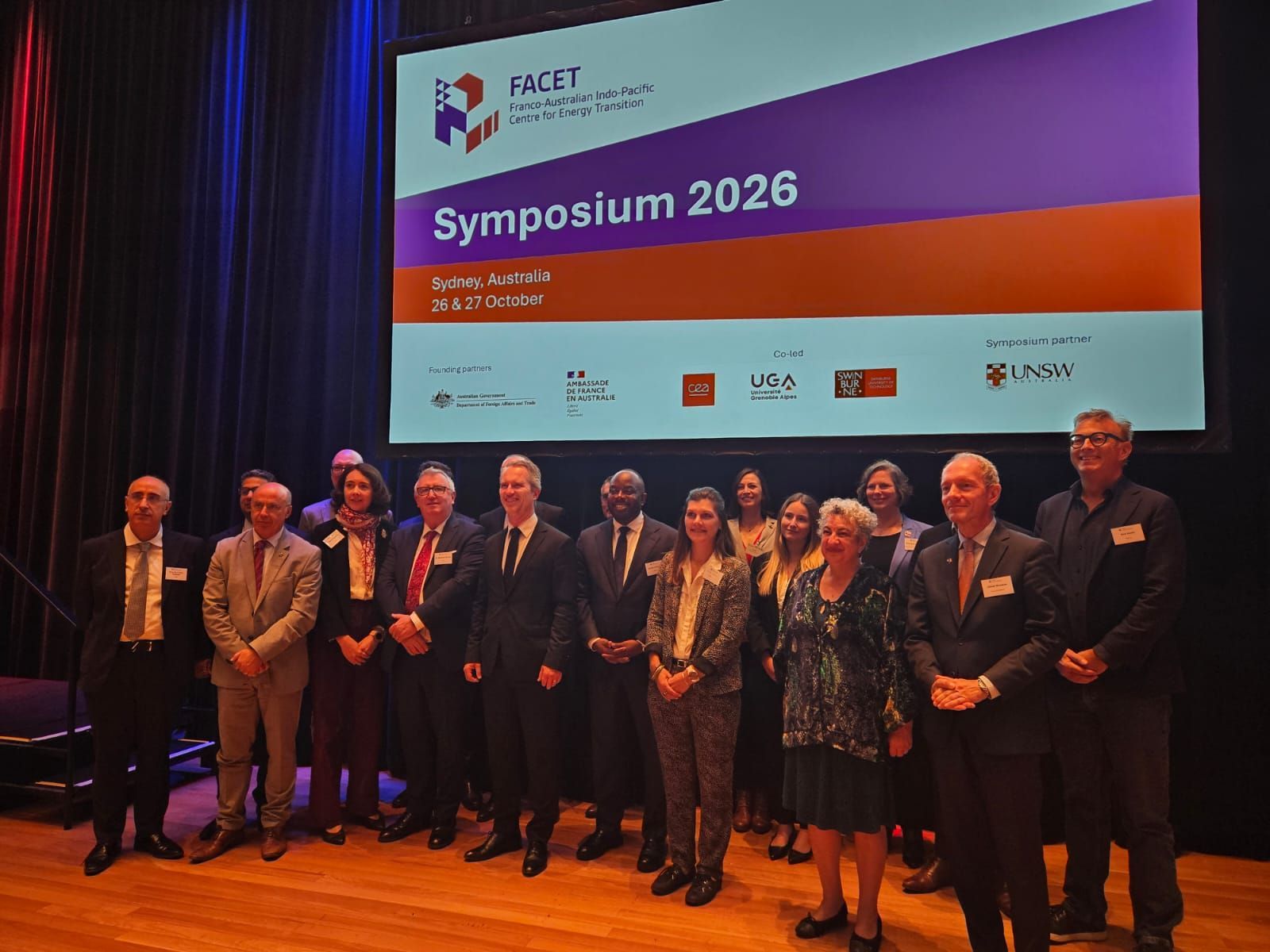

Sydney, 26 October 2026 - Four new Franco-Australian projects, from algae-based biofuels to carbon-smart mining, were announced today in the harbour city of Sydney at FACET’s third annual Symposium, hosted in partnership with UNSW. Backed by AUD 1.38 million in industry co-contributions, they show French and Australian researchers and companies investing in shared solutions to the region’s energy challenges. A joint initiative of the French and Australian Governments, co-led by founding partners CEA, Université Grenoble Alpes (UGA), and Swinburne University of Technology, FACET delivers on that collaborative vision of a collective response to the energy transition in both nations and the Indo-Pacific.


Demand for FACET from industry keeps growing. The 2026 round saw a 64% increase in applications from 2025, and industry is driving this demand with its own funds thanks to the successes of past years in advancing ambitious commercially relevant technologies and projects for deployment in solving real world challenges. The four selected projects bring AUD 1.38 million in co-investment from project partners, nearly 55% of total project funding, building on last year’s result, when co-investment exceeded the 50% ambition set by FACET.


The newly funded projects show the breadth, ambition and impact of the FACET portfolio:

  • Algae to fuel. Turning CO₂-absorbing microalgae into sustainable biofuels in Australia, and helping Indo-Pacific nations adopt this process to build their own resilient local fuel supply chains.
  • Pacific shipping decarbonised. An open-source planning platform, co-designed with maritime authorities and local operators, to reduce carbon emissions and facilitate public investment in turn.
  • Cleaner mining. Develop a digital twin demonstrator at an operational mine in New Caledonia to optimise decarbonisation pathways based on real operational data, laying the foundations for replication in Australia.
  • Smarter rare earths. New thermodynamic data to make critical minerals processing more sustainable, cost-effective, and efficient.


The announcement comes at a pivotal moment for FACET. In June 2026, Senator the Honourable Penny Wong, Minister of Foreign Affairs of Australia, and Minister Jean-Noël Barrot, Minister for Europe and Foreign Affairs of France, announced in Paris that FACET, the flagship of the France–Australia 2023 Roadmap will be continued under the future upgraded Roadmap.


In September, the Climate 4.0 Hub, FACET’s innovation program operated by Swinburne University of Technology, welcomed its first cohort of six French start-ups to Melbourne for a dedicated accelerator programme, and FACET co-organised the Southeast Asian Symposium on Energy Transition and Security (SEASETS) with Swinburne University of Technology Sarawak Campus in Malaysian Borneo, extending regional cooperation.


The Symposium featured results from a project funded in 2024: a pre-feasibility study by Downer, CEA, Axens and H2Potential for a low-carbon fuel demonstration plant in New South Wales, Victoria and Queensland – a timely contribution as Australia looks to build its fuel security.


The Symposium also welcomed a high-level delegation of roughly 30 French researchers from CEA and UGA. In the days ahead, the delegation will extend its engagement to Adelaide, Brisbane, Melbourne, Perth and New Caledonia, strengthening ties with Australian and Pacific research and industry partners.


From sustainable fuels and low-carbon shipping to cleaner mining and critical minerals processing, the 2026 projects reflect the practical innovation needed to meet the energy challenges of the coming decades. Backed by growing industry investment, FACET is demonstrating how international research and industry partnerships can deliver solutions at scale helping build a more resilient, secure and sustainable energy future for the region.


Snapshots of 2026 projects


1. FAB Algae – French-Australian Biofuels from Algae


Topic: New fuels


Applicants: CEA Algae Bioprocesses Platform; Algenie, University of Technology Sydney (UTS); TotalEnergies OneTech


Description:

The FAB Algae project aims to reduce carbon emissions by converting CO₂-absorbing microalgae into sustainable biofuels. It targets hard-to-decarbonise sectors such as transport and industry, where emissions remain persistently high.

Combining French and Australian expertise, the project will test and scale up efficient, cost-effective algal biomass production for biofuel applications. It will integrate CEA algal strains optimised for oil and carbohydrate production with Algenie's intensified photobioreactor technology. A key objective is to help Indo-Pacific countries develop local, resilient energy supply chains and reduce their reliance on imported fuels.

Aligned with FACET's decarbonisation priorities, the project will strengthen international partnerships to deliver deployable solutions for viable low-carbon fuels and scalable clean energy pathways.


2. An Open-Source Platform for Maritime Decarbonisation Planning in the Indo-Pacific


Topic: New fuels; maritime decarbonisation


Applicants: Zéphyr & Borée; University of New South Wales (UNSW); Pacific Community (SPC), Maritime Transport Division; Solomon Islands Maritime Authority (SIMA), Solomon Islands; Vanuatu Maritime Safety Authority (VMSA), Vanuatu; Ministry of Information, Communications and Transport (MICT), Marine Division, Kiribati


Description:

Maritime shipping is the lifeline of Pacific Island countries and territories, yet remains almost entirely dependent on fossil fuels. Despite the urgency of the transition, Pacific governments, regulators, port authorities and shipping operators lack accessible, integrated planning tools to assess decarbonisation pathways and attract the investment needed to implement them.

This project will develop an open-source platform, co-designed with the maritime authorities that will use it, covering vessel operations (voyage and route optimisation, slow steaming and wind-assisted propulsion), fleet transition (phase-out and phase-in scheduling, lifecycle costing) and clean fuels and technologies (e-methanol, e-ammonia, biofuels, hydrogen and shore power).

UNSW will partner with Zéphyr & Borée, a French maritime operator contributing voyage and vessel-operation data, route-optimisation expertise and experience in decarbonised maritime transport, alongside SPC and a consortium of Indo-Pacific maritime authorities. The project will deliver an MIT-licensed toolkit translating Pacific climate commitments into investable maritime decarbonisation pathways.


3. PAC-MINE – Pacific Alliance for Carbon-Smart Mining


Topic: Industrial decarbonisation; mine electrification


Applicants: MEMKO; CNRTEC (New Caledonia Mining Cluster); G2ELAB, Université Grenoble Alpes (UGA); CEA; EDF; Dassault Systèmes Australia


Description:

PAC-MINE is the first phase of a broader Franco-Australian initiative to decarbonise mining operations, starting with a targeted demonstrator at an operational mining site in New Caledonia. It addresses a critical challenge: mining operators cannot adequately de-risk competitive decarbonisation through isolated equipment trials or standalone cost studies alone.

The project will test an integrated workflow combining real production data from Fleet Management Systems, electrification options, CEA's CAIRN energy-system optimisation tool, MBSE-based digital twin simulation, grid impacts and investment sequencing. The deliverable will be a validated decision-support demonstrator comparing decarbonisation pathways against operational performance, cost and emissions criteria.

Led by CNRTEC and MEMKO, with Dassault Systèmes Australia, CEA, EDF Australia & Singapore and UGA-G2ELAB, the project will lay the foundations for replication in Australia and subsequent market deployment.


4. TREESURE – Thermodynamic data for Rare Earth Elements SUstainable REfining


Topic: Critical minerals; rare earth elements


Applicants: Lynas; CEA/ISEC/ICSM


Description:

The TREESURE project aims to improve the extraction of critical rare earth elements from monazite minerals, focusing on the acid-cracking process, which remains insufficiently understood.

Led by Lynas and CEA/ISEC/ICSM, the project will generate reliable thermodynamic data using calorimetry. These data will be incorporated into models designed to optimise this key industrial processing step, currently under development by Lynas and Curtin University, with selected results also made available through scientific publications.

The research will progressively move from model compounds to complex, ore-like systems representative of Australia's Mount Weld mine. By improving understanding of rare earth ore processing, TREESURE aims to support a more sustainable supply of critical rare earth elements through Franco-Australian collaboration aligned with FACET's objectives.


The Franco-Australian Indo-Pacific Centre for Energy Transition (FACET) is a historic France-Australia partnership on climate change, established in December 2023 under the Australia-France bilateral roadmap. Jointly funded by the Australian Department of Foreign Affairs and Trade (DFAT) and the French Ministry for Europe and Foreign Affairs, FACET is co-led by CEA, Université Grenoble Alpes, and Swinburne University of Technology - which also hosts the Centre at its Melbourne campus in Australia. The Centre is designed to deepen bilateral cooperation through strategic research and innovation in sustainable and inclusive energy systems, while also supporting energy transition efforts across the Indo-Pacific region.

For media inquiry, please reach out to Sarah Cumming, Co-Director, FACET - sarah.cumming@expertisefrance.fr
 

By Lacey Zhang • June 19, 2026
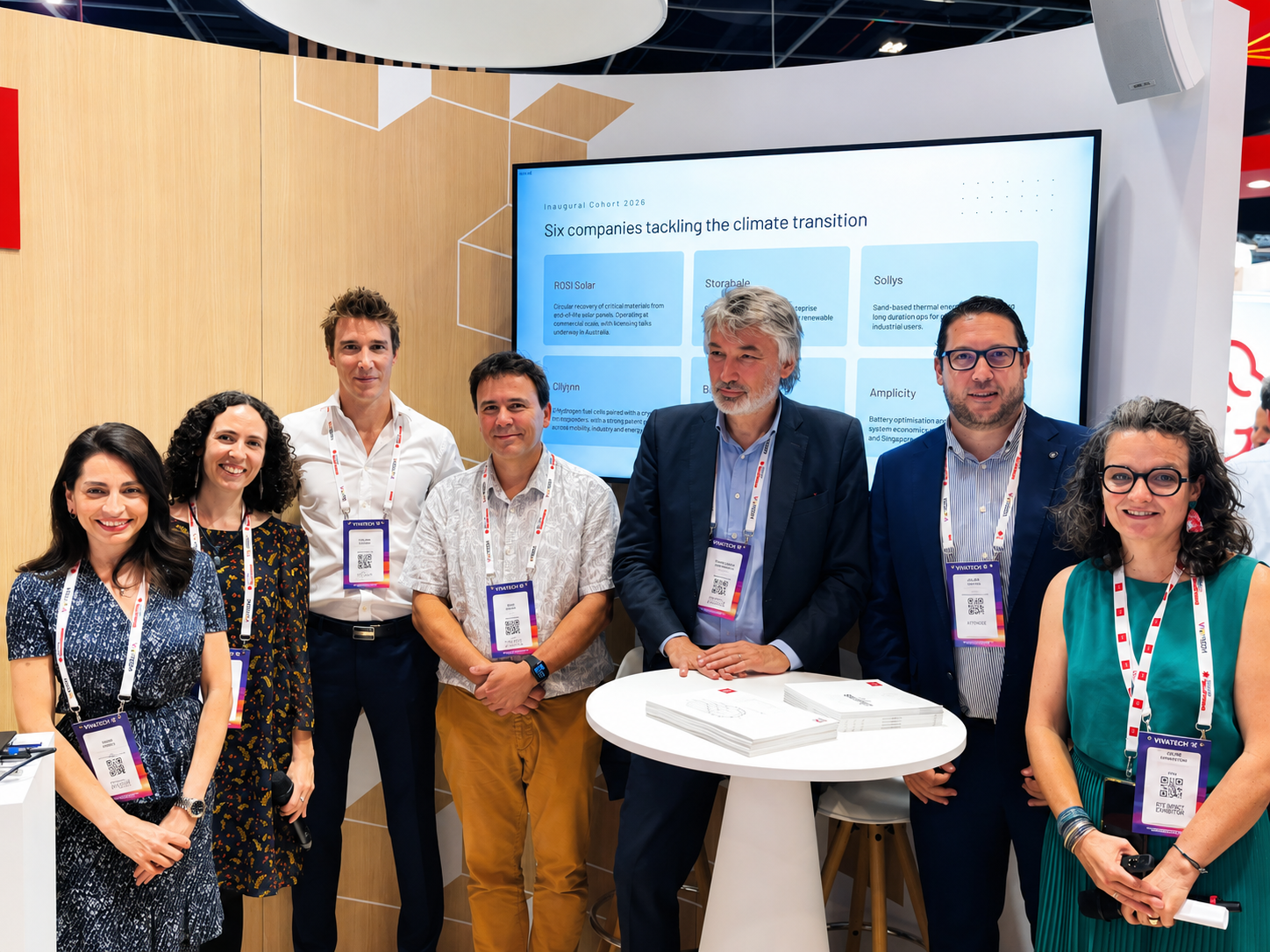
Paris – 18 June 2026 The Franco-Australian Indo-Pacific Centre for Energy Transition (FACET) is pleased to announce the selection of six innovative French climate-tech startups that will join the Climate 4.0 Hub Flagship Accelerator program, hosted at Swinburne University of Technology’s Hawthorn campus in Melbourne, Australia. Climate 4.0 Hub: A first-of-its-kind Franco-Australian Initiative First announced in October 2025 in Grenoble, France during FACET’s 2025 annual Symposium - the Climate 4.0 Hub is the first initiative of its kind dedicated to accelerating French climate-tech companies in the Australian market, while strengthening bilateral cooperation on energy transition challenges. Supported by the Australian Department of Foreign Affairs and Trade and the French Ministry for Europe and Foreign Affairs , the Hub is co-invested and run by Swinburne , a founding academic partner of FACET, and draws on expertise from fellow founding academic partners CEA and Université Grenoble Alpes . A cornerstone of France-Australia cooperation under the 2023 bilateral roadmap, FACET is an innovative partnership that strengthens collaboration between France and Australia on energy transition challenges across the Indo-Pacific region. It connects government, research institutions, and industry to accelerate the development, testing, and deployment of low-carbon solutions and sustainable energy initiatives, while fostering international collaboration and innovation at scale. Five-month acceleration program in Melbourne Following a rigorous three-month scouting process and two months of due diligence, with support from EDF power solutions Australia and Climate Tech Partners , six French startups have been selected to form the inaugural Climate 4.0 Hub Flagship Accelerator cohort. These startups are tackling critical challenges in global clean energy transition across solar panel recycling, hydrogen innovation, industrial decarbonization, and smart building efficiency. The program will be delivered over five months in two phases. The first offshore phase will cover market entry mentoring, competitive landscape insights, legal guidance, and grant support. The second phase, hosted on Swinburne’s Hawthorn campus in Melbourne, Australia, is a three-month intensive acceleration focused on commercialization, investor readiness, and direct access to partners and consumers. Inaugural cohort of startups · Amplicity helps industrial companies and critical infrastructure operators unlock new revenue, improve energy resilience and accelerate decarbonisation by turning battery systems into revenue-generating energy assets. · BeeZ FM is the AI-powered marketplace that matches buildings with GreenTech and Green Funds to make decarbonisation inevitable. · Clhynn is a high-impact industrial deep tech start-up offering a new decentralised electricity for mobility (land/air/sea) and stationary apps. · Storabelle delivers competitive, low-carbon industrial heat by replacing gas boilers with renewable electricity that would otherwise be curtailed, storing it as heat for use on demand. · Sollys Energy develops solutions that enable the deployment and optimization of renewable energy projects. · ROSI Solar is a French cleantech company specialized in the high-value recycling of end-of-life photovoltaic modules. VivaTech showcase before departure The six selected startups were officially introduced as part of the Climate 4.0 Hub Flagship Accelerator’s inaugural cohort at VivaTech 2026 in Paris, ahead of their departure for Melbourne in early July. The presentation took place with participation from the Victorian Government , represented by the Commissioner for Victoria to Europe. Held at Europe’s leading technology and innovation event, the introduction of the cohort at VivaTech 2026 provided a platform to engage with investors, industry leaders, researchers, and policymakers. It also underscored the growing ambition of the France-Australia partnership in climate and energy innovation and marked an important milestone in the development of the Climate 4.0 Hub. As the inaugural cohort prepares to begin their acceleration journey in Melbourne, FACET looks forward to supporting their growth and strengthening innovation links between the French and Australian ecosystems. Sarah Cumming, Co-Director of FACET commented, “ Australia is one of the world’s fastest-growing climate markets, and French innovators are exceptionally well positioned to contribute to its momentum. The selection of this inaugural cohort reflects both the depth and excellence of French climate innovation and the strength of the Franco-Australian collaboration in advancing shared energy transition priorities. We look forward to the partnerships that will emerge through the Climate 4.0 Hub .” Heath Evans, Associate Director of the Climate 4.0 Hub, said " This program sits at the heart of one of the most significant climate-focused partnerships between France and Australia and that bilateral weight opens doors for these founders that simply wouldn't be available through any other pathway ." He added participating founders will have the opportunity to de-risk international expansion and establish market presence in this fast-growing market. He also highlighted “ Teams selected for the Climate 4.0 Hub will be immersed within Swinburne Innovation Studio’s entrepreneurial ecosystem, with access to world-class researchers across clean energy, decarbonization, and climate resilience, as well as receiving tailored connections to industry. These companies will also become eligible for investment opportunities through Swinburne Ventures Limited, ensuring they have everything they need to scale their climate solutions into Australia. " About FACET - the Franco-Australian Indo-Pacific Centre for Energy Transition : FACET is a historic France-Australia partnership on climate change, established in December 2023 under the Australia-France bilateral roadmap. Jointly funded by the Australian Department of Foreign Affairs and Trade and the French Ministry for Europe and Foreign Affairs, FACET is co-led by the CEA, Université Grenoble Alpes, and Swinburne University of Technology - which also hosts the Centre at its Melbourne campus in Australia. The Centre is designed to deepen bilateral cooperation through strategic research and innovation in sustainable and inclusive energy systems, while also supporting energy transition efforts across the Indo-Pacific region. Climate 4.0 Hub media contact: Heath Evans, Associate Hub Director, Climate 4.0 Hub hmevans@swin.edu.au
By Sarah Cumming • March 12, 2026
Since early 2025, Downer Group, CEA and H2Potential have been developing a pre-FEED (Front-End Engineering Design) study for an Australian eFuels Plant under the Franco-Australian Indo-Pacific Centre for Energy Transition (FACET). This plant will produce synthetic fuels (eFuels) for the maritime and aviation sectors - addressing two hard-to-abate industries critical to global decarbonisation - while strengthening critical regional fuel security. With more than 80% of Australia’s liquid fuels currently imported, which account for over half of the nation’s final energy demand, the project will harness Australia’s abundant low-carbon renewable energy resources and the latest technologies to produce secure, low-carbon eFuels. Axens is a leading international provider of process technologies, developed by IFP Energies Nouvelles (IFPEN), catalysts, equipment and services for the refining and petrochemical sectors, with a large and validated portfolio of energy transition technologies, including Sustainable Aviation Fuel (SAF), carbon capture, utilisation and storage (CCUS), and chemical recycling of plastics. Axens brings its role as a global technology provider to the project, contributing proven process technologies and industrial analysis to support the development of advanced downstream eFuels production pathways. This further strengthens the group’s existing capabilities, including Downer’s strength as a Tier 1 constructor and integrator with decades of delivery across Australia’s industrial and power generation sectors; CEA’s world-renowned research leadership in eFuel synthesis pathways, carbon capture, and hydrogen technologies; and H2Potential’s globally recognised deep expertise in hydrogen development and eFuels. With Axens joining the project, these shared capabilities form a tightly integrated project team, combining research excellence, industrial engineering expertise and global technology leadership to address the challenges of decarbonising maritime and aviation transport, while strengthening regional fuel security. The Pre-FEED is scheduled for completion in April 2026. Mai-Phuong Do, Axens, Managing Director South East Asia: “ Australia plays a strategic role in the development of eFuels, thanks to its promising renewable electricity production potential which is essential for economically viable synthetic eFuels production. We are proud to join this ground-breaking Franco-Australian initiative, which uniquely combines the expertise of our two countries into a single, collaborative effort ”. Murray Richards, Downer, Executive General Manager – Energy & Industrial: “ The energy transition is a complex challenge that requires collaboration and innovation. By working closely with universities, research institutions, and industry, we can unlock practical solutions that drive real impact. With decades of expertise in solution architecture, asset management, industrial services and power generation, Downer is proud to play a key role in this project alongside Axens, CEA and H2Potential as part of FACET. eFuels represent a critical piece of the puzzle in reducing emissions across hard-to-decarbonise industries like maritime and aviation. This initiative reflects our commitment to practical, future-focused solutions that help create a more sustainable tomorrow .” Sarah Cumming, FACET, Co-Director: “ We are delighted to welcome Axens to this pioneering initiative. Their proven expertise in sustainable fuel technologies strengthens our collective ambition to accelerate the energy transition and deliver innovative solutions for hard-to-abate sectors .” Francois Aguey-Zinsou, H2potential, CEO: “ We are glad to see AXENS joining the team, helping us to demonstrate how we can produce e-SAF at cost. While the current Hydroprocess Ester and Fatty Acid route (HEFA) is limited by the availability of waste oil, and the alcohol to jet fuel strongly relies on the availability of biomass, we see power to liquid converting CO2 and hydrogen as an essential route to scale up SAF. ” Claire Gauthier, CEA, Head of the Carbon Circular Economy Program: “ As an R&D institute specializing in technology and process expertise, we found the collaboration with Axens to be highly productive. The complementary expertise contributed to the techno-economics of jet production, combined with their team's professionalism and responsiveness, made them a standout technology partner.” About Axens Axens group ( www.axens.net ) provides a complete range of solutions for the conversion of oil and biomass to cleaner fuels, the production and purification of major petrochemical intermediates, the chemical recycling of plastics and all natural gas treatment and conversion options. The offer includes technologies, equipment, furnaces, modular units, catalysts, adsorbents and related services. Axens is also specialized in Carbon Capture. Axens is ideally positioned to cover the entire value chain, from feasibility study to unit start-up and follow-up throughout the entire unit life cycle. This unique position ensures the highest level of performance with a reduced environmental footprint. Axens global offer is based on highly trained human resources, modern production facilities and an extended global network for industrial, technical supports & commercial services. Axens is an IFP Group company. FACET press contact: info@franceaustraliaenergy.com
February 23, 2026
Call for Bold Climate and Energy Startups! FACET and the Climate 4.0 Hub are delighted to present the Flagship Accelerator Programm e during a dedicated session conducted exceptionally in French. All your questions about the programme and how to navigate the Australian market will be addressed. Register -> here !
By Melanie Ducros • December 15, 2025
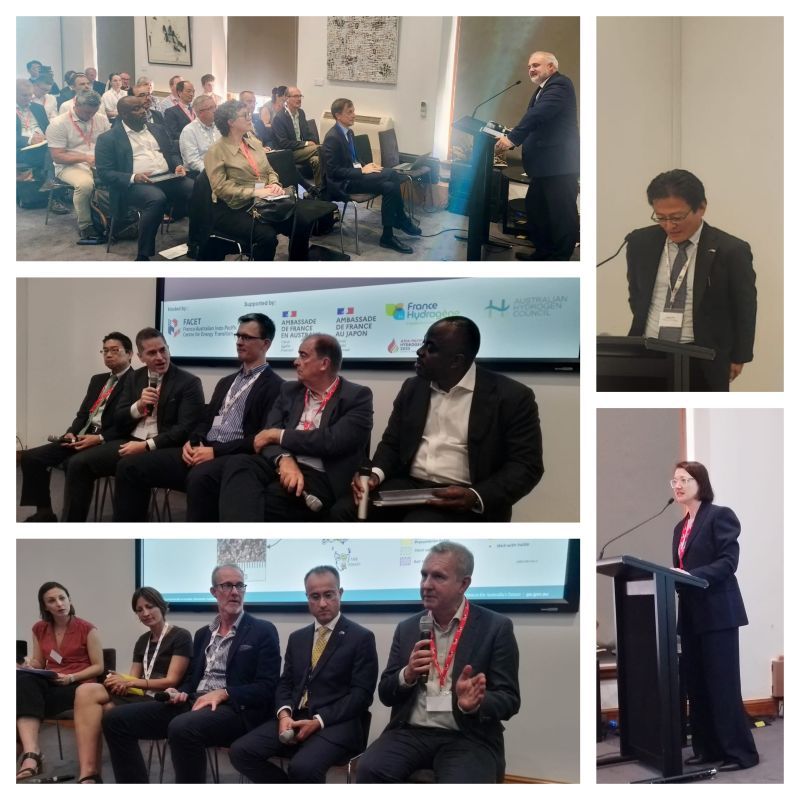
On 19 November 2025, FACET convened its second Trilateral Hydrogen Workshop, bringing together more than 50 senior government, industry, and research leaders from Australia, France, and Japan. Organized alongside the Asia-Pacific Hydrogen Summit, the workshop focused on two strategic themes: e-fuels and natural hydrogen, two strategic priorities seen as key drivers for fostering trilateral innovation and cooperation. This article is a summary of the key discussion and learning points from the workshop. Growing trilateral momentum since Tokyo 2022 The event took place three years after the inaugural workshop in Tokyo in 2022, which primarily focused on research. Since then, the hydrogen sector has evolved dramatically, with discussions now extending to investment, industrial deployment, and policy frameworks as Professor Julie Cairney, Interim Deputy Vice-Chancellor (Research) at University of Sydney reminded at the workshop. Opening the event, His Excellency Pierre-André Imbert, Ambassador of France to Australia , emphasised the shared mission driving the partnership: “France, Australia, and Japan are united by a common vision: a clean, sustainable, and secure energy future. […]. As we look ahead, we need to be guided by the conviction that the energy transition is not a race against each other, but a race against time - and one we can only win together. This workshop embodies the principle that no single country can decarbonize alone”. The workshop began with an overview of the three countries’ hydrogen strategies and examples of how FACET initiatives align with national priorities. Hydrogen strategies at a glance Australia updated its National Hydrogen Strategy in September 2024 introducing major incentives under the Future Made in Australia package, including a AUD$6.7 billion Hydrogen Production Tax Incentive and an expanded AUD$2 billion Hydrogen Headstart Program. Catherine Zerger, Head of Hydrogen Strategy and Industrial Futures Branch at the Department of Climate Change, Energy, the Environment and Water (DCCEEW) shared that Australia’s guarantee of origin scheme has just been legislated in Australia in Decembre 2024 and was just launched few weeks before the workshop. The Guarantee of Oigin is designed to verify the use of renewable energy and low emissions products. Under the Product Guarantee of Origin (PGO) side of the scheme, certificates will record the emissions intensity and key attributes of Australian made products like green hydrogen and metals. It also enables access to government incentives like Hydrogen Headstart and the Hydrogen Production Tax Incentive. France updated in April 2025 its hydrogen strategy reaffirming the role of hydrogen as a cornerstone of its carbon neutrality plan, targeting 4.5 GW electrolysis by 2030 and 8 GW by 2035. H.E Pierre-André Imbert, Ambassador of France to Australia highlighted that a key focus is on synthetic fuels, particularly for aviation and maritime sectors. By 2035, over 70% of hydrogen produced in France will be dedicated to e-fuel production and the government has already approved funding for advanced engineering studies on sustainable aviation fuels, backed by a €200 million commitment. Japan , under its Green Transformation Promotion Act, plans to invest ¥15 trillion over 15 years to build a robust hydrogen supply chain. According to Uehara Eiji, Counsellor, Economics Embassy of Japan to Australia , it is supported by the Japan Hydrogen Fund (JHF), which has already raised over US $480 million. FACET new trilateral hydrogen project During the workshop, Katerina Aleksoska, General Manager International at the Australian Hydrogen Council , introduced a newly funded FACET project announced earlier in October 2025. The initiative seeks to unlock Australia’s green hydrogen export potential and strengthen supply chains linking Australia, France and Japan. It will examine the trilateral relationship as a strategic case study and will debut in January 2026 at the Hyvolution Paris 2026 | International Hydrogen Exhibition . The project will deliver a decision-support tool to help industrial consortia identify and position themselves for funding and project opportunities in hydrogen and hydrogen-derived industries.
By Melanie Ducros • October 8, 2025
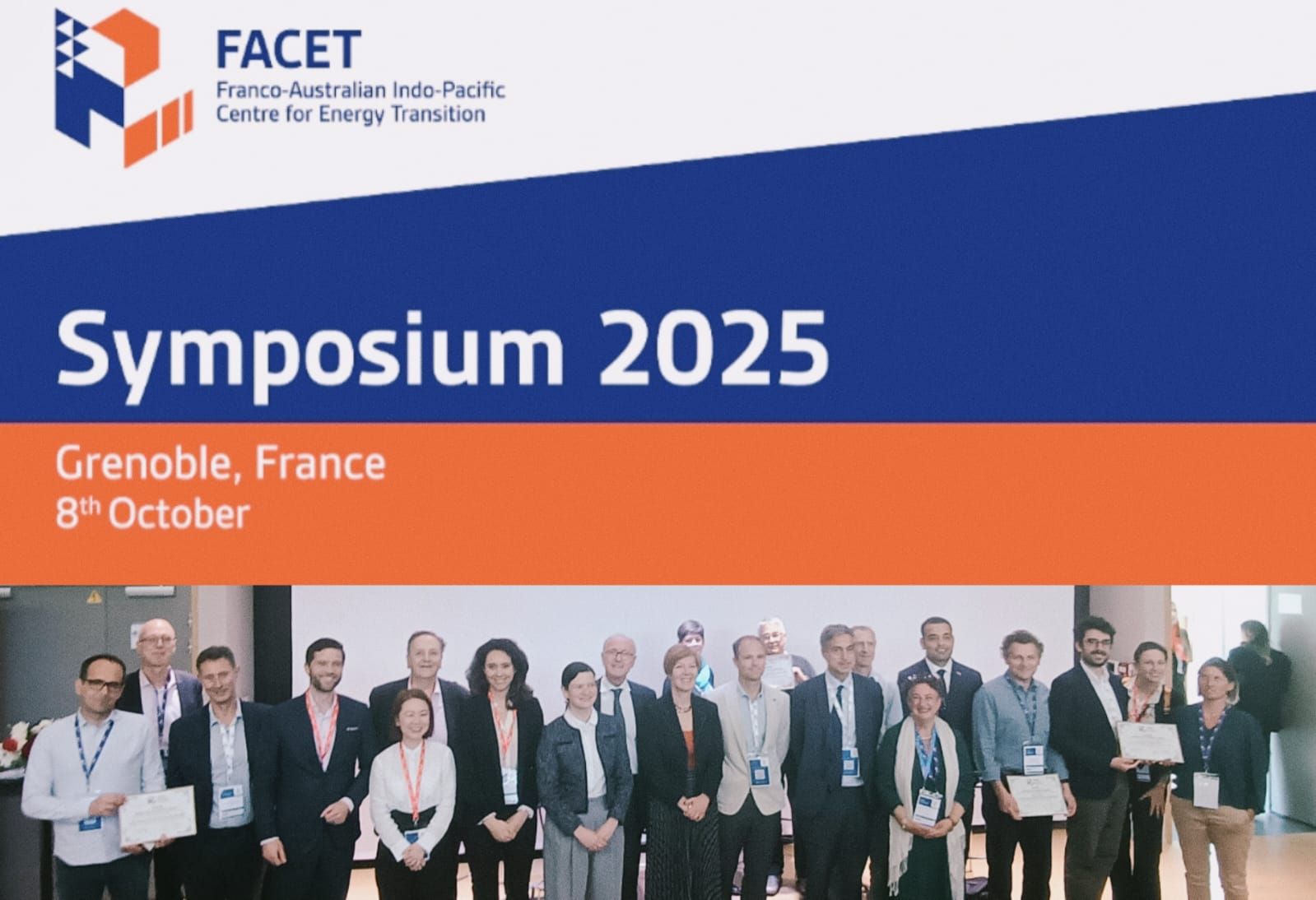
Unveiled in France at FACET’s second annual Symposium on 8 October 2025, the announcement brought together senior leaders from research, industry and government across Australia and France - underscoring the deepening partnership between the two nations in tackling climate and energy challenges. FACET set an ambitious goal for 2025: achieving at least 50% co-investment from project partners . That target has been decisively exceeded, with nearly AUD 3 million in co-investment secured , reflecting strong, shared commitment from both academic and industrial stakeholders. The newly funded projects showcase the breadth, ambition, and impact of the FACET portfolio: • Transforming mine waste into critical metals and green construction materials through a circular economy initiative focused on resource recovery. • A powerful simulation tool to support Australia’s shift to flexible, renewable energy systems that deliver reliable electricity and heat. • A French–Japanese–Australian collaboration to unlock the export potential of green hydrogen across the Indo-Pacific. • Unlocking liquid hydrogen storage making it safer and more affordable for large-scale energy use. • Fast tracking operations & maintenance for offshore wind learning from operational teaming with unmanned systems. • The launch of the Climate 4.0 Hub , a startup accelerator based at Swinburne University of Technology’s Hawthorn campus in Melbourne, connecting French and Australian entrepreneurs with innovation ecosystems and commercialisation pathways. The announcement also coincided with a landmark moment: the l argest ever Australian energy delegation to France , held as part of the FACET France Energy Transition & Innovation Tour, in partnership with the French Australian Chamber of Commerce & Industry (FACCI). Events across Paris, Lyon, and Grenoble provided a unique platform to deepen bilateral ties and showcase joint capabilities in clean energy and innovation. As the global community faces the accelerating challenges of climate change and energy security, FACET continues to lead from the front - catalysing innovation, driving investment, and fostering high-impact international partnerships for a more sustainable future. Snapshots of 2025 projects From mine waste to critical metals & green construction materials TAILS - Tailings and Innovative Leverage for Sustainability - French Australian collaboration to advance global sustainability, energy transition and industry decarbonation by extracting critical metals from mine waste and recovering minerals for the construction sector. Over 10 billion tonnes of mine waste, known as tailings, are produced globally each year - posing a serious environmental and safety threat due to the risk of dam failures and toxic leaks. Yet hidden in this waste are valuable critical metals, including rare earth elements (REEs) essential for clean energy technologies like EVs and wind turbines. In a game-changing collaboration, GHD, CEA and partners aim to recover these critical minerals and repurpose the non-metallic tailings into low-carbon construction products such as geopolymers, aggregates, and bricks. The project will use advanced mineral separation and testing to unlock value from tailings and build a scalable roadmap for full-scale rollout. By turning mine waste into a resource, the initiative not only reduces emissions, waste, and risk, but also strengthens strategic supply chains and promotes a circular economy. “Ultimately, this project transforms an environmental liability into a strategic, economic, and sustainable asset,” said Charles Vuillier of GHD. “We're not just cleaning up mine waste - we’re unlocking its potential to power the clean energy future and provide the materials for some of the build of tomorrow.” Partners: GHD, CEA – ISEC, BRGM, Invest Victoria Dispatchable DC grid DipatchGrid - Dispatchable DC grid: a flexible microgrid with intermittent generation and hybrid energy storage This project is developing a powerful simulation tool to support Australia’s shift to flexible, renewable energy systems that deliver reliable electricity and heat. Using a 10 MW DC microgrid as a case study, it repurposes legacy infrastructure from retired coal-fired power stations, and integrates wind, solar, and advanced storage technologies - thermal, chemical, and electrical - to ensure a stable, dependable power supply. At its core is a digital prototype that tests different system setups, checks grid stability, and models cost-effectiveness. This virtual microgrid will form the foundation for a digital twin, giving industry and policymakers a practical tool to guide real-world energy planning and deployment. According to Professor Gary Rosengarten, Director Sustainable Technologies & Systems, Enabling Impact Platform, RMIT “This isn’t just a study - it’s a decision tool for a smarter energy transition. By reusing old infrastructure and testing systems digitally before rollout, we’re building a cleaner, more reliable and cost-effective energy future.” Partners: RMIT, CEA LITEN, Storabelle, Rondo Energy, Université Grenoble Alpes, Australian Department of Energy, Environment and Climate Action Tripartite green hydrogen A tripartite approach to unlock Australia’s green hydrogen export potential to create sustainable hydrogen supply chains in Australia, France and Japan This trilateral project between France, Australia, and Japan will deliver a decision-support tool to strengthen collaboration in all three countries. Specifically, the tool will help French and Australian companies prepare for bids and projects in Australia, while also assessing the most viable export pathways to Japan and France. The project also aims to map supply chain opportunities, highlighting investment prospects, and identifying new business opportunities across the three countries. “This collaboration represents an important step forward in advancing global hydrogen innovation,” said Dr Julie Mougin, Deputy Director for Hydrogen Technologies at CEA, and Gordon Chakaodza, Director of the Victoria Hydrogen Hub (VH2). They added, “by combining the strengths of France and Australia, we will generate vital data and insights that open opportunities for companies to engage in three of the world’s most significant hydrogen markets.” Partners: CEA, Victorian Hydrogen Hub (VH2), Australian Hydrogen Council, Vireo Energy. Towards a safe and reliable hydrogen storage CHALIA: Condensation of Humid Air during Loss of Insulation Accident in LH2 tanks The CHALIA project is tackling one of the biggest challenges in clean energy: making liquid hydrogen (LH2) storage safer and more affordable. While LH2 offers zero emissions and high energy for heavy-duty transport, it also comes with risks - like pressure build-up, boil-off gas loss, and potential tank rupture. Current understanding of transient behaviour following tank failure remains limited, and accurate predictions of boil-off rates, even under normal operating conditions, require further improvement. This international collaboration between FEnEx CRC, CEA, and UWA is developing advanced tools, experiments, and simulations to better understand and predict LH2 behaviour during normal use and accidents. The project combines lab-scale testing with full-scale tank trials to improve safety standards, reduce storage losses, and support wider adoption of hydrogen. “This isn’t just about safety - it’s about unlocking hydrogen’s full potential as a clean energy solution. By understanding how LH2 behaves during storage, we can make it safer, cheaper, and ready for the real world.” commented Professor Eric May, Future Energy Exports (FenEx) CRC. Partners: Future Energy Exports CRC, CEA, University of Western Australia Fast tracking O&M for offshore wind LOTUSim-Energy (Learning from Operational Teaming with Unmanned Systems) Operations and maintenance (O&M) of offshore wind turbines are complex, costly, and risky, requiring specialised vessels and equipment to handle harsh maritime conditions. Technicians and divers face significant safety hazards, and planning must account for failures and weather. Drones and autonomous systems offer a safer, more efficient alternative, but they still require complex prototyping before deployment. Simulation provides a way to model and validate solutions beforehand, reducing risks and costs. The project LOTUSim-Energy proposes the first cross-domain (air, surface, underwater) maritime simulation platform for testing and validating autonomous O&M processes. It will allow simulation of various offshore wind turbine locations, drone behaviours, and weather conditions for scenario experimentation and anomaly detection. Partners: IRL Crossing, Naval Group, Swinburne University of Technology, Université Grenoble Alpes Accelerating high-impact climate tech startups Climate 4.0 Hub The Swinburne-FACET Climate 4.0 Hub is a dynamic new initiative accelerating high-impact climate tech start-ups from Australia and France. Located in Melbourne, the Hub aims to act as an accelerator by supporting 5 to 10 start ups annually with hands-on mentorship, access to global investors, cutting-edge R&D, and pilot opportunities. Focused on clean energy, decarbonisation, critical minerals, and climate resilience, the Hub bridges industry and research to turn innovations into scalable solutions. By addressing the key "valleys of death" in climate tech commercialisation, the Hub will unlock new pathways for sustainable growth and position Australia as a regional leader in climate innovation. "We’re excited to launch the Swinburne-FACET Climate 4.0 Hub and foster climate innovation and collaboration between Australia, France and the Indo-Pacific" says Swinburne's Vice-President, Innovation and Enterprise, Werner van der Merwe. “Through our accelerated start up program, we’ll be providing targeted support and strong industry ties, which leverages the thriving innovation culture and capabilities offered by our in-house Swinburne Innovation Studio, to foster real-world impact with climate tech start-ups from Australia and France". Partners: FACET, Swinburne University, Twynam Earth Fund, ARENA, Invest Victoria, Business France, French Australia Chamber of Commerce, CEA, Université Grenoble Alpes Media contact: info@franceaustraliaenergy.com
By Melanie Ducros • September 11, 2025
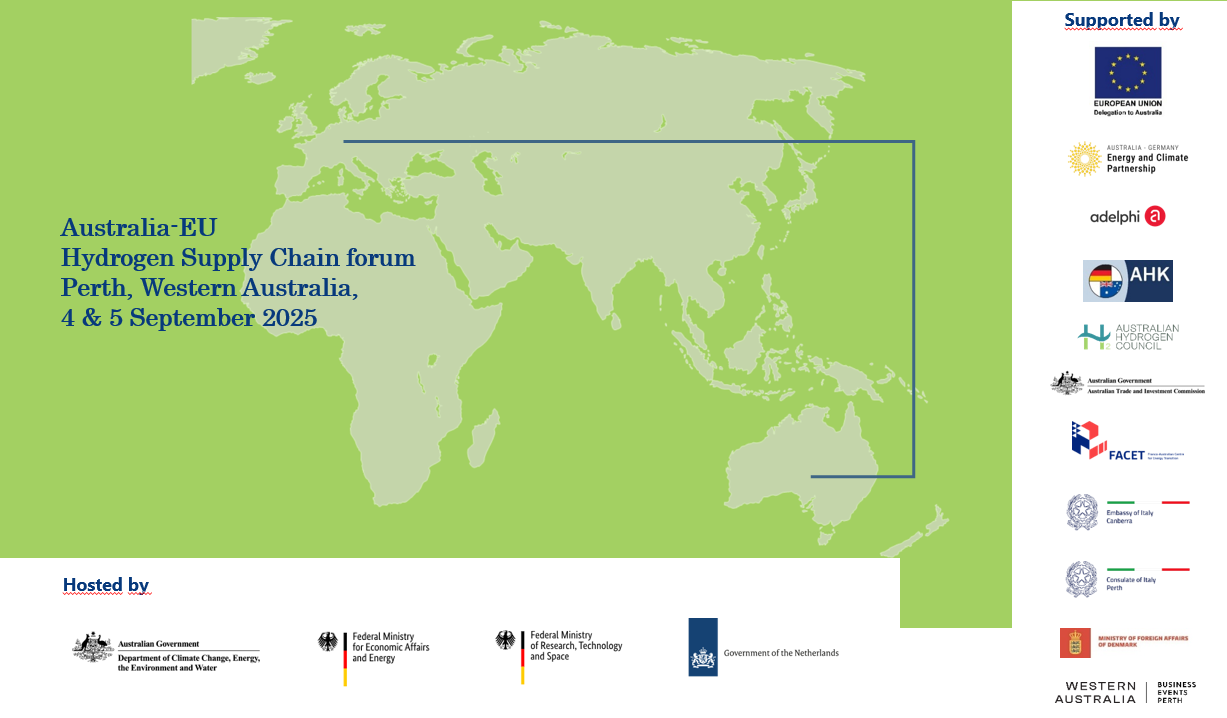
The Franco-Australian Indo Pacific Centre for Energy Transition (FACET) was honoured to take part in the Australia–EU Hydrogen Supply Chain Forum held in Perth. We warmly thank the organisers The German Embassy, The Embassy of the Netherlands, Adelphi & the German Chamber of Commerce and the EU Delegation in Australia, the Government of Western Australia, and Fortescue for their invitation and for hosting a week of high-level discussions, technical visits, and strategic exchanges. The event provided a valuable platform to showcase the growing strategic relationship between Europe and Australia in the hydrogen sector.
By Joy Sumner • September 11, 2025
The Franco-Australian Indo-Pacific Centre for Energy Transition (FACET) is excited to stage its second Symposium this October in Grenoble, France, unveiling the first wave of speakers, with more to come!
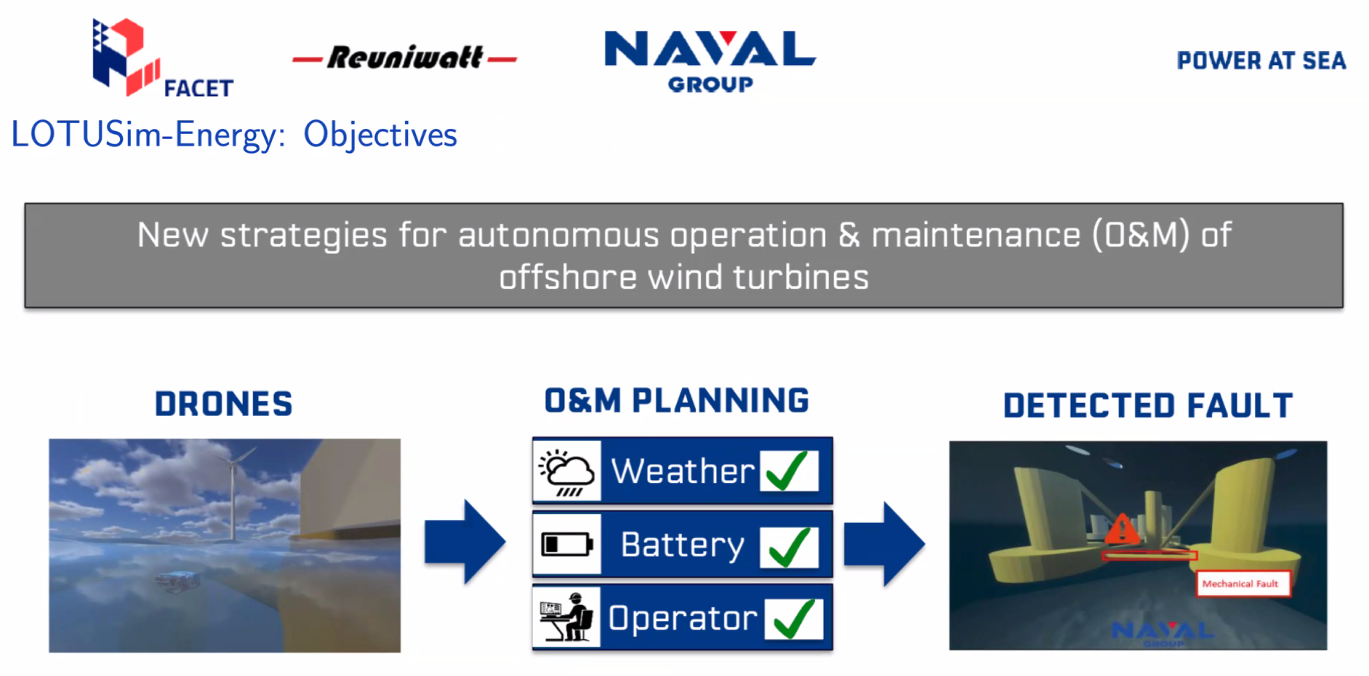
Diagram: Drones assess offshore wind turbines, DSM planning, and detected fault.
By Melanie Ducros • September 1, 2025
On July 28–29, the FACET team traveled to Adelaide to participate in a dedicated workshop on LOTUSim. This was a valuable opportunity to meet with the teams from IRL Crossing lab and CNRS , University of Adelaide and Flinders University, and to explore potential next steps for the project. These discussions helped strengthen collaboration and identify new directions for applying LOTUSim in energy transition contexts. A bout LOTUSim LOTUSim is a real-time maritime simulation platform, and Naval group has worked the past few months in designing it on case studies that unable it to support human-drone teaming in offshore wind O&M. The platform features realistic physics across air, surface, and underwater domains, making it a first-of-its-kind cross-domain simulator. Lotusim can simulate the behavior of underwater drones, but also surface vessels, aerial drones, and even marine mammals or birds, depending on the case study. Powered by AI, it supports a wide range of predictive scenarios for trajectories and interactions in both marine and aerial environments. The platform enables: Simulation of various offshore wind turbine locations Modeling of drone (submarine, boat and aerial) behaviors and weather conditions Scenario experimentation and anomaly detection for submarine drone for offshore wind maintenance Ultimately, operators could benefit from an immersive interface to monitor and manage simulated autonomous O&M systems for offshore wind. A market study for offshore wind applications FACET has funded a market study to explore the use of the platform for the offshore wind sector. While LOTUISim has clear applications in the maritime sector, this study—funded by FACET—explores its relevance for energy transition use cases. A restitution workshop was held on July 28, 2025, in Adelaide at Naval Group APAC, bringing together representatives from research, industry, and government from both France and Australia. A heartfelt thank you to all participants for their thoughtful and nuanced insights ! In this specific case study, submarine drones were simulated. However, discussions during the panel following the presentation highlighted other promising applications for offshore wind, such as the simulation of marine mammals or the use of drones for submarine cable maintenance. A Collaborative Approach Ultimately, the ambition is to make this project as collaborative as possible, by involving: Experts in relevant technical fields Companies in the energy transition sector Stakeholders with concrete case studies in the nergy transition to contribute This collaborative effort will help tailor Lotusim to the specific needs of the offshore wind industry, for the benefit of all. What’s Next? How to contribute ? In line with this vision, LOTUSim will be released as open source on November 1st, creating a platform for shared innovation in support of the energy transition. Feel free to reach out regarding the Lotusim project—especially to propose case studies or explore partnership opportunities. The FACET team would be delighted to support and foster collaboration around this initiative!
Mentorship program for French-Australian women in business. Features silhouette portraits in blue, pink, and red.
By Melanie Ducros • July 28, 2025
Launching the Women-to-Women Mentorship Program in Energy with FAWIB at the Lumière event in Melbourne 24th July. Apply to become a mentor or a mentee this october!
An aerial view of a row of solar panels sitting on top of a lush green field.
By Wei Li Wong • November 18, 2024
Joint Media Release